Can the old tile be reused?
Often it can, but breakage allowance and matching matter. A written scope should say whether existing tile will be reset, whether replacement tile may be needed, and how color or profile differences are handled.
A tile roof is two systems: the concrete tile that sheds most weather and the underlayment that provides the waterproof layer below it. In Mesa, a multi-decade roof may still look orderly from the street while asphalt-felt paper, flashing, and fasteners have taken years of heat and movement. A ceiling stain can therefore appear without a broken tile in view. The useful question is what the covered layer looks like once a careful inspection exposes it.
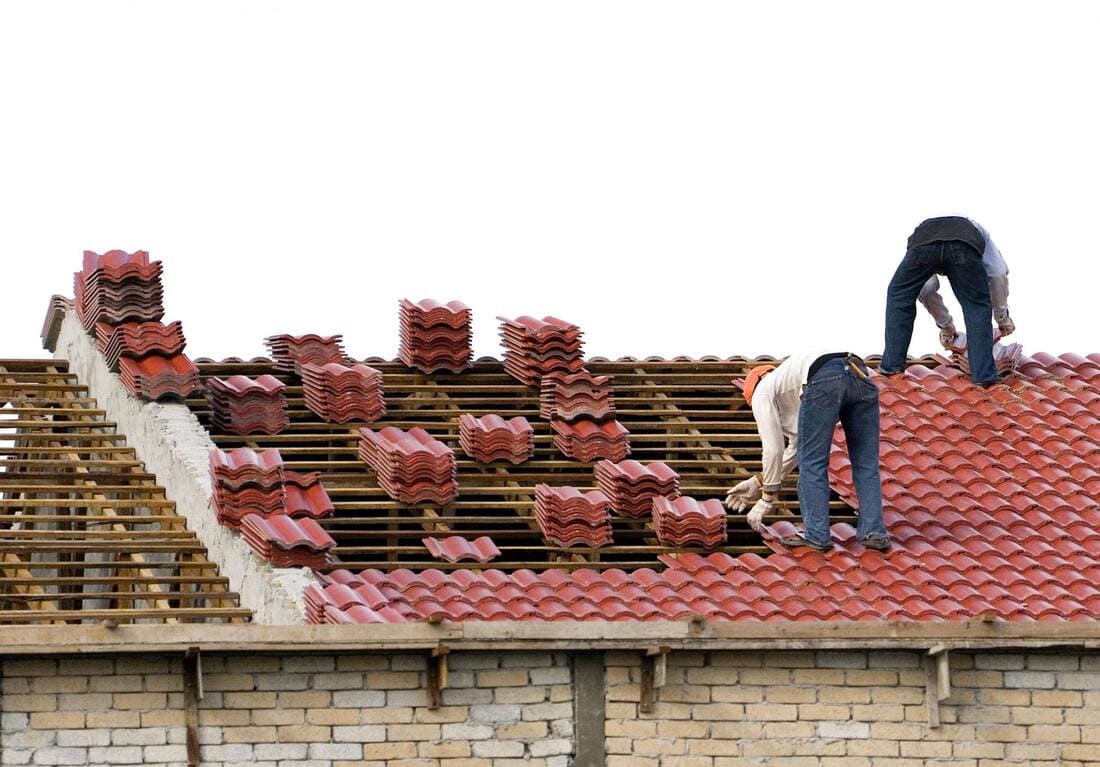
Tile underlayment repair should begin with the leak area rather than a blanket replacement pitch. The assigned contractor should lift only enough tile to diagnose the detail, photograph the exposed paper, examine nearby laps and flashing, and check whether the material remains workable beyond the opening. That evidence separates a penetration repair from section work or a broader lift-and-relay. If water is active, begin with Mesa leak tracing and temporary protection when needed.
Interior stains after wind-driven rain, cracked mortar at roof edges, slipped field tile, debris lines beneath tile, brittle paper at exposed edges, and repeat leaks on separate slopes all raise an underlayment question. Water can enter at a valley, sidewall, pipe, skylight, or fastener and travel below the tile before reaching the deck. The tile itself may show no dramatic break, so a driveway view cannot confirm the waterproof layer.
Asphalt-felt tile underlayment in Valley conditions often lasts about 15–20 years, though product, installation, roof exposure, ventilation, and maintenance can move the result. That range is particularly relevant to older central and east Mesa homes, Dobson Ranch-era construction, retirement communities, and long-owned rentals. Age is a reason to inspect more carefully, not permission to skip diagnosis or assume every slope has failed at once.
A localized repair can make sense when one penetration, valley, sidewall, skylight, or small tile field has failed and sound material surrounds it. Section work may be better when nearby paper tears or crumbles as tile is moved. A full lift-and-relay becomes realistic when several slopes are brittle or leak history shows failures in unrelated places. Review the repair-or-replace factors before treating a repeated patch as the least expensive answer.
The quote should spell out tile handling, breakage assumptions, replacement-tile matching, underlayment product, flashing, disposal, decking allowances, and protection of the occupied home. Ask whether existing tile will be stacked and reset or removed from the roof during work. If hidden damage appears, the change process and unit or section pricing should already be clear. The cost guide provides planning ranges for comparing scopes that open different amounts of the roof.
Mesa has many winter-visitor homes and rentals where the person paying for the roof is not standing in the driveway. Provide the gate or lockbox instructions, local contact, tenant notice requirements, and rooms with interior stains before the visit. Ask for a wide roof-plane photo, a close view before and after tile is lifted, and completion images. Those records let an absent owner judge the failed layer instead of approving work from a brief phone description.
Mild fall and winter conditions can offer a practical scheduling window for planned underlayment work before seasonal occupancy, but the contractor still needs a suitable forecast and material plan. If a city, county, or HOA requirement affects replacement-level work, the assigned contractor verifies the current rule rather than quoting an old fee or assumption. For wind-related movement, the monsoon repair guide explains how documentation and temporary work fit into the decision.
Often it can, but breakage allowance and matching matter. A written scope should say whether existing tile will be reset, whether replacement tile may be needed, and how color or profile differences are handled.
Asphalt-felt tile underlayment often lasts about 15–20 years in Valley conditions. Product, installation, exposure, ventilation, and maintenance history all matter, so age is a planning signal rather than a diagnosis. Leaks or brittle material on an older system justify a closer look beneath the tile.
It can be. Lifting tile, staging materials, and repairing decking create noise and access needs. Owners should ask about driveway use, cleanup, and whether interior access is needed for leak confirmation.
No. Single-detail failures are repairable. Broadly brittle underlayment, repeated leaks, or multiple affected slopes can push the roof toward larger section work or replacement.
Mesa Roof Pros
(928) 543-6544Ask for photos of the underlayment condition before approving tile work on an older Mesa roof.